
What Specific NEMA Power Cord Do You Require?
Views: 0 Author: Site Editor Publish Time: 2026-08-11 Origin: Site


Specifying an incorrect power cord for commercial or industrial equipment introduces severe operational and safety risks. Electrical fires, equipment damage, compliance violations, and unplanned downtime frequently stem from improper cord selection. The core challenge lies in matching exact equipment power requirements—voltage, amperage, and phase—with the correct NEMA configuration. Simultaneously, engineers must select the appropriate cable jacket material for the operating environment. A mismatch in any of these variables compromises the entire electrical circuit.
This guide provides a technical framework for evaluating and selecting the exact NEMA power cord configuration, wire gauge, and jacket material required for specific deployment scenarios. By analyzing nomenclature, environmental ratings, and compliance standards, facility managers and electrical engineers can ensure safe, reliable power delivery across diverse applications.
Key Takeaways
NEMA Nomenclature Dictates Compatibility: The NEMA numbering system strictly defines voltage, amperage, grounding, and locking characteristics; mismatching these guarantees physical or electrical incompatibility.
Jacket Material is as Critical as the Connector: Selecting the right cable type (e.g., PVC vs. neoprene rubber) determines the cord's resistance to oil, water, temperature extremes, and physical abrasion.
Gauge and Length Impact Performance: American Wire Gauge (AWG) must be scaled according to cord length and amperage to prevent dangerous voltage drops and thermal overload.
Compliance is Non-Negotiable: Environments like hospitals, data centers, and industrial floors require specific certifications (e.g., UL, CSA, Hospital Grade "Green Dot") beyond standard NEMA configurations.
Decoding NEMA Nomenclature for Your Power Cord
The NEMA Numbering System Explained
The National Electrical Manufacturers Association (NEMA) standards exist to prevent dangerous cross-connections between incompatible voltages and amperages. Without a standardized system, users could easily plug a 120V device into a 240V receptacle, causing immediate catastrophic failure. The NEMA numbering system eliminates this risk through strict physical geometries.
A standard NEMA designation follows a specific alphanumeric format. The prefix "L" indicates a locking connector, whereas a blank prefix denotes a standard straight blade. The first number represents the voltage classification. For example, "5" designates a 125V rating, while "6" designates a 250V rating. The hyphenated number indicates the maximum amperage rating, such as 15, 20, or 30 amps. Finally, the suffix specifies the gender of the connector: "P" stands for Plug (male), and "R" stands for Receptacle (female). Understanding this syntax is the first step in specifying compatible electrical hardware.
NEMA Designation | Voltage Rating | Amperage Rating | Connector Type | Typical Application |
|---|---|---|---|---|
5-15P | 125V | 15A | Straight Blade | Standard office equipment, PCs, monitors |
5-20P | 125V | 20A | Straight Blade | Commercial microwaves, heavy hand tools |
L5-30P | 125V | 30A | Locking | RV shore power, small generators, marine docks |
6-50P | 250V | 50A | Straight Blade | Industrial arc welders, plasma cutters |
L6-30P | 250V | 30A | Locking | Data center PDUs, heavy industrial machinery |
The Evolution of Grounding (NEMA 1 vs. NEMA 5)
Historical electrical standards relied on ungrounded 2-prong configurations, designated as NEMA 1. The NEMA 1-15P plug features two parallel flat blades—one hot and one neutral. Modern electrical codes heavily restrict the use of ungrounded cords. They remain permissible only for specific double-insulated applications where the device chassis cannot become energized, such as small consumer electronics or basic lamps.
The NEMA 5 standard introduced the grounding pin, marking a major evolution in electrical safety. A NEMA 5-15P plug includes the two parallel blades plus a round or U-shaped ground pin. This grounding path safely directs fault currents away from the user and into the earth, tripping the circuit breaker during a short circuit. For all equipment featuring a metal chassis or operating in industrial environments, a grounded NEMA 5 or higher configuration is legally required.
Straight Blade vs. Locking Configurations
Straight-blade cords serve standard commercial and office settings where equipment remains stationary and accidental disconnection poses minimal risk. Devices like computers, monitors, and standard appliances utilize straight-blade NEMA 5-15P or 5-20P connectors for ease of use. Field technicians can quickly deploy and relocate these devices without specialized receptacles.
Locking connectors are mandatory for environments with high vibration or where accidental disconnection poses severe safety or operational risks. NEMA L5, L6, L14, and L7 configurations feature curved blades. Once inserted into the receptacle, the user twists the plug to lock it into place. This mechanical interlock prevents the cord from vibrating loose. Industrial machinery, server racks, and 277V industrial lighting systems rely exclusively on locking configurations to maintain continuous power.
Specialty and High-Draw Configurations
Higher-capacity and niche NEMA types accommodate specific heavy-duty use cases. The NEMA 14 series, including 14-30 and 14-50, provides 125/250V power, utilizing four prongs (two hot, one neutral, one ground). These are standard for large appliances like electric dryers and Level 2 electric vehicle charging stations. The inclusion of the neutral wire allows the equipment to run 120V internal components alongside 240V heating elements.
The NEMA TT-30 configuration is a specialized 125V, 30A standard designed specifically for recreational vehicles. It features two angled flat blades and a round ground pin. For heavy equipment requiring 250V without a neutral wire, the NEMA 6-50 configuration delivers up to 50 amps. Commercial ovens, plasma cutters, and industrial arc welders frequently utilize the 6-50 standard to meet their high current demands.
Evaluating Cable Jacket Materials and Environmental Ratings
Understanding Cable Jacket Letter Designations
Before selecting a specific material, engineers must understand the standard letter designations printed on the cable jacket. These letters dictate the cord's approved usage environment according to the National Electrical Code (NEC).
S: Service Grade (Extra Hard Service, rated for 600V)
J: Junior Service (Hard Service, rated for 300V)
T: Thermoplastic (typically PVC)
E: Elastomer (Thermoset rubber equivalent)
O: Oil-Resistant outer jacket
OO: Oil-Resistant outer jacket and inner insulation
W: Weather and Water Resistant (approved for outdoor use)
Indoor and Light-Duty Applications
The connector configuration only dictates electrical compatibility; the cable jacket dictates environmental survivability. For standard office or light commercial use, flexibility and cost-efficiency take priority over ruggedness. Indoor environments lack exposure to harsh chemicals, extreme temperatures, or heavy mechanical abrasion.
In these controlled settings, an SPT-2 PVC parallel cord provides an optimal solution. This double-insulated, flat design is engineered specifically for low-amperage, indoor devices such as clocks, lamps, or light electronics. The PVC insulation offers excellent dielectric strength and flexibility for easy routing behind furniture. However, engineers must note its limitations. SPT-2 wire lacks the structural integrity to withstand physical abuse, crushing forces, or exposure to petroleum-based solvents. Deploying this cord type on a warehouse floor guarantees rapid insulation failure.
Industrial and Medium/Heavy-Duty Environments
Manufacturing floors, automotive workshops, and construction sites present a hostile environment for standard PVC cables. Cords in these locations face constant foot traffic, heavy equipment rolling over them, and exposure to cutting fluids or lubricating oils. Standard plastics will quickly degrade, crack, or melt under these conditions.
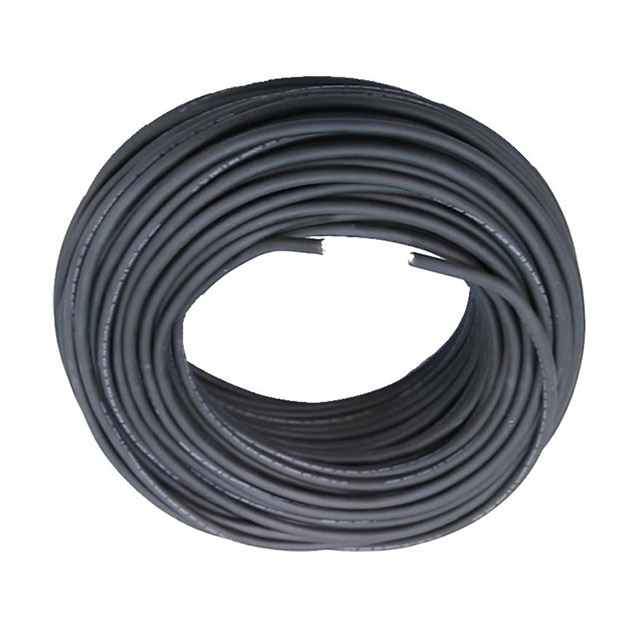
These environments require the deployment of a YZW neoprene rubber cord or similar thermoset elastomer cables. Neoprene offers superior resistance to oil, solvents, and moderate mechanical stress. Unlike thermoplastics, thermoset rubber maintains its structural integrity during temperature fluctuations without becoming brittle in the cold or overly soft in the heat. Specifying a neoprene jacket ensures the internal conductors remain protected against the abrasive realities of industrial operations. The cross-linked molecular structure of thermoset rubber prevents it from melting even if momentarily exposed to hot metal shavings or welding sparks.
Wet Locations and Extreme Conditions
Outdoor, marine, or washdown environments demand the highest level of environmental protection. Water ingress, ultraviolet radiation, and sub-zero temperatures will rapidly destroy standard indoor cables, leading to ground faults and potential electrocution hazards.
Applications exposed to the elements necessitate a waterproof flexible cable carrying specific ratings like STW or SEOW. The "W" designation indicates the jacket is rated for outdoor weather and water resistance. These cables feature specialized polymer blends that block UV degradation and prevent water ingress. Furthermore, they are engineered to maintain flexibility in sub-zero temperatures, allowing workers to coil and uncoil the cables in freezing conditions without cracking the outer jacket. Marine environments also require these cables to resist salt spray corrosion, ensuring long-term reliability on docks and offshore platforms.
Sizing Your Power Cord: AWG, Length, and Voltage Drop
American Wire Gauge (AWG) vs. Amperage Capacity
Sizing the internal conductors of the power cord is critical for safe and efficient power delivery. The American Wire Gauge (AWG) system measures the cross-sectional area of the copper wire. AWG numbers share an inverse relationship with wire thickness; a smaller AWG number indicates a thicker wire capable of carrying more current.
Mismatching the AWG to the NEMA amperage rating results in severe thermal overload. The wire will act as a resistor, generating heat until the insulation melts and causes a fire. Engineers must consult ampacity charts to match the conductor size to the maximum expected load.
NEMA Amperage Rating | Minimum AWG Required | Maximum Continuous Load (80% Rule) | Typical Application |
|---|---|---|---|
10 Amps | 18 AWG / 16 AWG | 8 Amps | Light electronics, small fans |
15 Amps | 14 AWG | 12 Amps | Standard office equipment, monitors |
20 Amps | 12 AWG | 16 Amps | Server racks, commercial microwaves |
30 Amps | 10 AWG | 24 Amps | RV power, small industrial machinery |
50 Amps | 6 AWG | 40 Amps | Commercial ovens, EV chargers |
Calculating Length and Mitigating Voltage Drop
Electrical resistance increases proportionally with cord length. While a 14 AWG wire safely carries 15 amps over a 10-foot distance, pushing that same current through a 100-foot cord introduces significant resistance. This resistance causes a voltage drop at the equipment end.
If the voltage drops below the equipment's operating threshold, motors will draw more current to compensate, leading to overheating and premature failure. The NEC recommends a maximum voltage drop of 3% for branch circuits. To mitigate voltage drop on long runs, engineers must step up the wire gauge. For example, moving from a 14 AWG to a 12 AWG conductor is necessary when a 15A load operates on a cord exceeding 50 feet. A general rule dictates increasing the wire size by one gauge step for every 50 feet of additional length.
Thermal Considerations and Derating Factors
Ambient temperature and confined spaces heavily influence a cord's ampacity. Standard AWG ratings assume an ambient temperature of 30°C (86°F) and free air circulation to dissipate heat.
When routing cables through hot industrial environments, server room hot aisles, or tightly bundled raceways, engineers must apply derating formulas. High ambient temperatures reduce the cable's ability to shed heat. If derating is ignored, the cable insulation will exceed its maximum temperature rating and melt under continuous load. Specifying high-temperature insulation, such as 105°C rated jackets, provides an additional safety margin for challenging thermal environments. Furthermore, if more than three current-carrying conductors are bundled together, the NEC requires a reduction in the allowable ampacity to account for the trapped heat.
Industry-Specific Compliance and Certification Standards
UL/CSA Certifications and OSHA Compliance
Procuring unlisted or counterfeit cords introduces massive liability and safety risks. Regulatory bodies mandate strict testing protocols to ensure electrical components perform safely under stress. Underwriters Laboratories (UL) in the United States and the Canadian Standards Association (CSA) in Canada provide the baseline certifications for electrical safety.
UL and CSA testing evaluates multiple failure points under standard UL 817. Laboratories test the flammability of the jacket material to ensure it self-extinguishes rather than propagating a fire. They conduct pull strength tests on the plug molding to verify the internal wires will not tear loose under mechanical strain. Dielectric voltage withstand tests confirm the insulation can block high-voltage spikes without rupturing. OSHA inspectors routinely check for these certification marks; utilizing unlisted cords results in immediate compliance violations and fines.
Hospital Grade (Green Dot) Requirements
Patient care vicinities demand an elevated standard of electrical reliability. Standard commercial cords are insufficient for medical equipment. NEMA 5-15P and 5-20P cords used in hospitals must carry the "Hospital Grade" designation, universally identified by a green dot on the plug face.
Hospital Grade certification requires rigorous grounding reliability testing under UL 498. The ground pin must withstand severe bending forces without breaking or losing continuity. The plug assembly undergoes enhanced crush and impact testing to ensure structural integrity even if crushed by heavy hospital beds or diagnostic equipment. The abrupt pull test ensures the plug remains intact even if a nurse accidentally yanks the cord from a distance. These stringent requirements guarantee that life-saving medical devices maintain a flawless ground connection at all times.
Data Center and High-Density IT Environments
Data centers operate under unique power density and thermal constraints. While standard NEMA locking connectors often deliver power to the rack unit, the internal distribution frequently transitions to IEC configurations to save space and standardize global hardware.
Cable routing in high-density IT environments requires specific thermal and flammability ratings. Cables routed under raised floors or through overhead plenums must feature low-smoke, zero-halogen (LSZH) or plenum-rated jackets. These materials prevent the circulation of toxic gases through the facility's HVAC system in the event of a fire. Furthermore, the high ambient temperatures of server exhaust aisles require cords with elevated temperature ratings to prevent insulation degradation over the lifespan of the server hardware.
Common Specification Errors and Implementation Risks
Misunderstanding Receptacle Backward Compatibility
Frequent mistakes occur during procurement when facility managers misunderstand receptacle geometries. NEMA standardizes backward compatibility for specific configurations, but this compatibility is strictly one-way.
A 20A receptacle (NEMA 5-20R) features a distinctive T-slot on the neutral blade. This design safely accepts both a standard 15A plug (5-15P) and a 20A plug (5-20P), as the 20A circuit can easily handle a 15A load. However, attempting to force a 20A plug, which has a perpendicular neutral blade, into a standard 15A wall receptacle is physically impossible. This intentional incompatibility prevents users from drawing 20 amps through a circuit breaker and wiring rated only for 15 amps. Overlooking this detail causes immediate operational delays during equipment deployment.
Ignoring Environmental Degradation
Deploying standard indoor PVC jackets in hostile environments guarantees premature failure. A common error involves running standard commercial cords outdoors or across industrial washdown zones.
When exposed to UV rays, standard PVC undergoes photochemical degradation, causing the plasticizers to leach out. The jacket becomes brittle, cracks, and exposes the energized internal conductors. Similarly, exposure to industrial chemicals or extreme cold causes standard plastics to shatter upon impact. Specifying the correct environmental rating, such as a thermoset rubber or UV-resistant elastomer, is mandatory for long-term reliability.
Overlooking Strain Relief and Bend Radius
The mechanical failure point of most power cords occurs exactly where the cable enters the NEMA plug. Repeated bending, pulling, and twisting at this junction causes the internal copper strands to fatigue and snap, leading to intermittent power loss or internal arcing.
Evaluating the molded strain relief is essential. High-quality cords feature robust, ribbed strain reliefs that distribute the bending force over a wider area. Furthermore, installers must calculate and respect the safe bend radius of the cable. Forcing a thick, heavy-gauge cord into a tight 90-degree turn immediately behind a server rack violates the bend radius, crushing the insulation and stressing the conductors. Proper cable management prevents these mechanical failures.
Conclusion
Specifying a power cord requires precise alignment between the NEMA connector configuration, the internal wire gauge for current capacity, and the external jacket material for environmental survival. Ignoring any of these factors compromises safety and equipment longevity. Follow these actionable steps to ensure correct specification:
Audit your existing equipment spec sheets to document exact voltage, amperage, and phase requirements to determine the correct NEMA configuration.
Measure the physical distance from the receptacle to the equipment to calculate the required AWG and prevent equipment-damaging voltage drop.
Assess the deployment environment for oil, water, UV exposure, or extreme temperatures to select the correct jacket material.
Verify all required industry certifications, such as UL listing or Hospital Grade marks, before finalizing procurement.
FAQ
Q: What is the difference between a NEMA 5-15P and a NEMA 5-20P power cord?
A: The NEMA 5-15P is rated for 15 amps and features two parallel flat blades and a ground pin. The NEMA 5-20P is rated for 20 amps; its neutral blade is turned 90 degrees to form a horizontal configuration, preventing it from being plugged into a 15-amp circuit.
Q: Can I plug a NEMA 5-15P power cord into a NEMA 5-20R receptacle?
A: Yes. A NEMA 5-20R receptacle features a T-shaped neutral slot designed to accept both 15-amp (5-15P) and 20-amp (5-20P) plugs safely, as the 20-amp circuit can easily support a 15-amp load.
Q: When should I specify a locking NEMA connector over a straight blade?
A: Specify a locking connector in environments with high vibration, heavy foot traffic, or where accidental disconnection of critical equipment like servers or industrial machinery would cause severe operational disruption or safety hazards.
Q: Can I use an SPT-2 PVC parallel cord for outdoor or industrial equipment?
A: No. SPT-2 cords are designed strictly for light-duty, indoor applications. They lack the physical durability, UV resistance, and chemical resistance required to survive outdoor weather or harsh industrial environments.
Q: What environmental ratings make a waterproof flexible cable necessary?
A: Applications exposed to rain, snow, washdown procedures, or sub-zero temperatures require waterproof cables carrying "W" ratings like STW. These jackets block water ingress, resist UV degradation, and remain flexible in freezing conditions.
Q: What does the Hospital Grade Green Dot mean on a NEMA power cord?
A: The Green Dot indicates the cord meets rigorous UL standards for patient care vicinities. It signifies enhanced grounding reliability, superior crush resistance, and robust plug assembly integrity to ensure life-saving equipment never loses power or ground.


