
Why High-Flex ARC Welding Cable Is Essential for Automated Welding Systems
Views: 0 Author: Site Editor Publish Time: 2026-06-24 Origin: Site


When designing an automated welding cell, we often treat cable assemblies as a complete afterthought. You might spend hundreds of thousands of dollars on state-of-the-art robotic arms. However, neglecting the vital power delivery system creates a massive blind spot in your production line. Manufacturers invest heavily in advanced robotics and high-end power sources to boost output. Yet unscheduled downtime frequently halts production entirely. This costly downtime usually stems from standard cable fatigue, severe jacket degradation, or sudden voltage drops during continuous robotic articulation. An upgraded ARC Welding Cable is not just a premium accessory. It functions as a structural necessity for modern manufacturing. Upgrading your cabling maximizes system consistency and extends the effective duty cycle of your automation. In this guide, you will learn exactly how specialized flexible cables eliminate common robotic bottlenecks. We will explore key evaluation metrics, optimal routing strategies, and ways to guarantee repeatable weld quality. Proper integration ultimately safeguards your entire automation investment.
Key Takeaways
Downtime Mitigation: High-flex cables drastically reduce unscheduled maintenance by surviving continuous torsion and tight bend radii in robotic cells.
Weld Consistency: Proper stranding and shielding prevent micro-arcing and voltage drops, ensuring exact and repeatable weld sizes.
Total Cost of Ownership (TCO): While upfront costs are higher, the extended lifecycle of high-flex cable yields a lower TCO compared to frequent replacement of standard cables.
Specification Matters: Selecting the right cable requires aligning duty cycle, ampacity, and jacket material with the specific kinematics of your robotic system.
The Hidden Bottleneck in Robotic Welding: Standard vs. High-Flex ARC Welding Cable
Standard cables fail quickly in high-speed automated environments. Engineers design traditional cables primarily for manual dragging across factory floors. They do not build them to handle continuous, repetitive, multi-axis robotic twisting. When you integrate these standard cables into an automated cell, the rigorous kinematics quickly exceed their structural limits. Every single robotic movement twists, pulls, and bends the internal copper core. Over a short period, this mechanical stress accumulates invisibly beneath the outer jacket.
Continuous movement breaks down coarse copper stranding over time. Standard cables use thicker copper strands to carry electrical current. These thick strands resist bending and snap under repeated torsion. Broken strands create dangerous internal hot spots. These hot spots increase electrical resistance dramatically along the power path. Eventually, the excess heat melts the insulation and causes catastrophic system failure. Your automated cell suddenly stops working. You lose money every minute the robot sits idle.
Cable degradation directly causes severe production bottlenecks across the facility. Micro-stops become frequent as voltage fluctuates unpredictably. Poor wire feeding occurs because damaged cables restrict the internal liners. You will also see rejected parts due to inconsistent voltage delivery at the torch. When the High-Flex ARC Welding Cable degrades, your robotic arm cannot deliver the precise energy required for flawless welds. Manufacturers often blame the power source or the robot itself. However, the root cause usually lies within a failing cable assembly.
Key Evaluation Criteria for High-Flex ARC Welding Cable
Stranding Configuration and Bend Radius
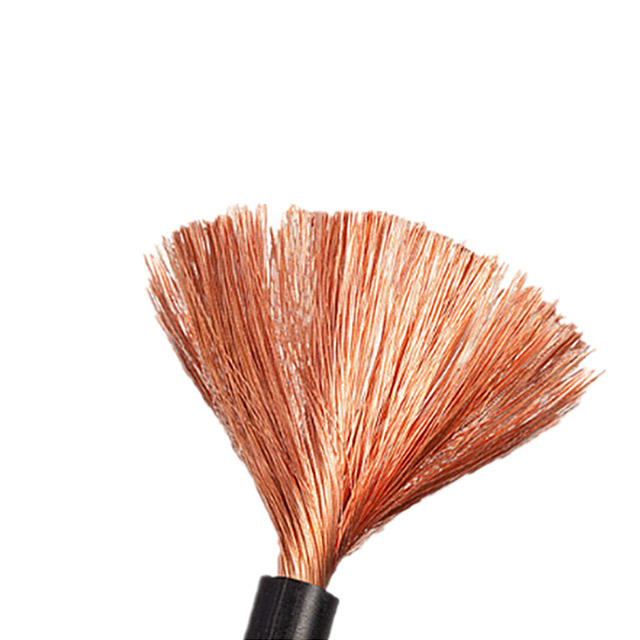
Evaluating a cable requires looking closely inside the jacket. Fine-drawn copper stranding represents the most critical feature for automation. High-quality automated cables utilize 30 AWG or finer copper strands. This ultra-fine stranding allows the assembly to achieve a very tight bend radius safely. It bends freely without experiencing structural fatigue or internal snapping. Copper must flex easily to survive robotic articulation.
You must evaluate the rated number of flex cycles thoroughly. Manufacturers test these cables under highly specific load conditions. A standard cable might survive a few thousand cycles before snapping. A true high-flex alternative endures millions of continuous cycles. Ask suppliers for exact testing parameters. They should prove their cables survive your required movement patterns.
Best Practices for Evaluating Stranding:
Request a physical sample to test the flexibility by hand.
Verify the strand count directly against the manufacturer's specification sheet.
Ask the vendor for case studies involving similar robotic setups.
Insulation and Jacket Durability
Robotic cells create exceptionally harsh working environments. Constant weld spatter, extreme ambient heat, and industrial lubricants attack cable jackets daily. You must compare jacket materials carefully before purchasing. Standard PVC melts, cracks, or hardens quickly under these conditions. Advanced polymers, EPDM, and Neoprene offer far better environmental resistance. These robust materials protect the fragile copper core from chemical breakdown and heat damage.
You should also evaluate resistance to "cable set." Cable set happens when a cable retains a deformed shape permanently. It forgets its original straight form. High-flex jackets bounce back to their original form instantly. This elasticity prevents the cable from binding during fast robotic movements. A binding cable restricts the robot and causes premature mechanical wear.
Common Mistakes in Jacket Selection:
Choosing standard PVC for high-spatter applications, leading to rapid jacket failure.
Ignoring chemical exposure, allowing industrial cleaners to degrade the rubber.
Assuming all black cables offer the same UV and extreme heat resistance.
Ampacity and Duty Cycle Ratings
Automated throughput fundamentally changes the rules of power delivery. Robots weld faster, harder, and longer than human operators. They do not take lunch breaks or shift changes. You must address this rigorous reality when selecting your power delivery system. High-speed production demands flawless electrical conductivity.
Calculate your ampacity requirements based strictly on a 100% duty cycle. Standard manual welding often operates safely at a 30% or 60% duty cycle. Automation pushes this rating to the absolute maximum limit. Selecting the proper gauge ensures the cable does not overheat during continuous batch runs. Overheated cables lose conductivity and degrade their protective jackets rapidly.
Feature Specification | Standard Cable | High-Flex Cable |
|---|---|---|
Strand Size | Thicker, coarse strands | 30 AWG or finer |
Flex Cycles | Low (thousands) | High (millions) |
Jacket Material | Basic PVC or generic rubber | Advanced polymers, EPDM |
Cable Set Resistance | Poor (retains bends permanently) | Excellent (highly elastic) |
Duty Cycle Fit | 30% - 60% (Manual operations) | Up to 100% (Automated cells) |
How High-Flex Cables Maximize Efficiency and Weld Quality
Ensuring Desired Weld Sizes
Intact high-flex cables deliver highly stable voltage to the contact tip. This stability prevents harmful energy fluctuations during the welding process. Voltage drops cause severe porosity, poor penetration, and uneven bead profiles. A compromised cable forces the power source to work much harder to compensate. This often results in a rejected part and wasted material. Maintaining stable power ensures exact, desired weld sizes every single time. Predictable energy transfer guarantees your automated cell meets strict quality control standards.
Optimizing the Wire Feed Path
Cable flexibility directly impacts smooth wire feeding in MIG/MAG automated setups. Rigid cables cause excessive internal friction inside the conduit. The welding wire drags heavily against the liner during tight robotic bends. Upgraded cables reduce this mechanical drag significantly. They create a smooth, consistent path from the wire feeder directly to the torch. This consistency eliminates frustrating bird-nesting and costly micro-stops. Smooth feeding directly correlates to higher overall production speed.
Throughput Reliability
You can frame this efficiency gain around highly predictable maintenance schedules. Unexpected mid-shift failures destroy daily production quotas and frustrate plant managers. Upgrading your cabling allows you to schedule maintenance proactively. Your maintenance team replaces components during planned downtime instead of fighting emergency fires. Predictable operations reduce stress on your workforce. They also keep your delivery schedules exactly on track for your demanding clients.
Symptom in Automated Cell | Potential Cable-Related Cause | High-Flex Solution |
|---|---|---|
Inconsistent Bead Profile | Voltage drops from broken internal strands | High strand count maintains steady conductivity |
Frequent Wire Bird-Nesting | Rigid cable binding the internal liner | Tight bend radius prevents internal friction |
Porosity in Finished Weld | Intermittent power loss during articulation | Continuous flexing capability ensures stable arc |
Implementation Realities: Managing Cable Assemblies in Robotic Cells
Cable Routing and Torsion Management
Even the highest quality cable will fail if routed improperly. You must manage routing and torsion correctly from day one. Use proper dress packs to guide the assembly safely along the robotic arm. Strain reliefs absorb the intense pulling force at rigid connection points. You must strictly avoid using tight zip-ties. Zip-ties pinch the jacket and crush the internal fine stranding. Always allow the cable enough slack to move freely without drooping excessively.
Mitigating "Cable Whip"
Fast robotic movements create violent physical dynamics during operation. Engineers call this specific phenomenon "cable whip." When the robotic arm stops suddenly, the loose cable continues moving forward. This uncontrolled momentum causes snagging against nearby fixtures and creates excessive tension. Proper cable suspension prevents this issue entirely. You should utilize dynamic brackets, spring balancers, and specialized retractors to keep the assembly taught. Managing these physical dynamics extends the lifespan of your equipment significantly.
Preventative Maintenance Integration
Establish clear physical baselines during the initial implementation phase. Take visual photos of the proper routing setup before production begins. Perform baseline electrical resistance testing on the brand new cable. Your maintenance team can track wear predictably by comparing future tests against these original baselines. This data-driven approach catches degradation before catastrophic failure occurs. Integrating these routine checks ensures maximum uptime.
Essential Maintenance Steps:
Conduct a visual inspection of the entire jacket every 500 operating hours.
Verify all strain relief connection points to ensure no excessive tension exists.
Measure electrical resistance continuously and compare it to initial baseline data.
Confirm dress pack brackets move freely without pinching the internal wires.
Clean heavy spatter accumulation off the outer jacket to prevent premature hardening.
Shortlisting Logic: Choosing the Right Cable for Your Automation Upgrades
Assessing Lifecycle Value
Comparing procurement options requires looking far past the initial purchase price. Standard cables certainly cost less upfront at the supply store. However, they generate massive hidden expenses through frequent replacement labor and lost production time. High-flex alternatives require a higher initial capital investment. This premium pays for itself rapidly by preventing costly mid-shift failures. Evaluating this long-term value ensures your automation investments deliver expected returns. We recommend discussing your specific needs regarding an ARC Welding Cable directly with specialists to ensure optimal selection.
Aligning Specs with Kinematics
Always match the cable specifications directly to your robotic arm kinematics. Evaluate the maximum physical reach and rotational limits of your specific equipment. A complex six-axis robot demands extremely high torsion ratings from its cabling. A simpler linear gantry system might only require high bending fatigue resistance. Aligning these technical factors guarantees optimal performance in your facility. We suggest reviewing your robotic manual to understand its exact movement limits.
Vendor Transparency and Compliance
Request verifiable testing data before placing large bulk orders. Reputable manufacturers gladly provide detailed flex-cycle test results to their clients. You should also ask for standard compliance certificates like RoHS, UL, or CSA. Transparent material specifications indicate a trustworthy and reliable vendor. Partnering with an experienced High-Flex ARC Welding Cable supplier guarantees optimal quality. Never buy based purely on flashy marketing claims; always demand concrete engineering proof.
Conclusion
Automated welding success fundamentally relies on the weakest link in your cell. Upgrading your cabling represents a vital preventative strategy. It secures high throughput and maintains strict quality standards continuously. Ignoring this component invites unpredictable downtime and rejected parts. High-flex options eliminate these costly operational hazards.
We strongly encourage technical buyers, manufacturing engineers, and procurement teams to audit their existing setups immediately. Calculate your current cable failure rates over the last year. Consult directly with specialized wire manufacturers to evaluate your specific needs. They will help you specify the precise high-flex assembly required to maximize your unique application.
FAQ
Q: What defines a "high-flex" ARC welding cable compared to standard cable?
A: A high-flex cable features a higher strand count of much finer copper wire. It uses specialized internal wrapping to reduce friction. The highly elastic jacket materials are specifically designed to survive millions of continuous flex cycles without retaining a deformed shape.
Q: How does high-flex cable impact the duty cycle of a robotic welder?
A: It does not change the machine's actual power rating. However, it ensures the entire system can physically run at continuous high duty cycles. It prevents the power delivery component from overheating or degrading during non-stop automated batch runs.
Q: What is the average lifespan of a high-flex welding cable in an automated cell?
A: Lifespan is measured in flex cycles and environmental exposure rather than pure calendar time. A properly routed cable can last millions of cycles. Emphasizing correct routing and using proper dress packs will maximize this longevity in your cell.
Q: Can I use high-flex cable for manual welding applications?
A: Yes, you can use it for manual tasks. It provides excellent ergonomics and reduces physical fatigue for human operators. However, the higher cost-to-benefit ratio is most easily justified in high-volume, continuous automated environments where downtime is extremely expensive.


