
Which energy storage cables are best for outdoor battery enclosures requiring UV-resistant and flame-retardant insulation
Views: 0 Author: Site Editor Publish Time: 2026-06-02 Origin: Site


Outdoor Battery Energy Storage Systems (BESS) routinely operate in harsh, unforgiving microclimates. Cables routed from battery banks to inverters must survive constant UV exposure and extreme temperature fluctuations while effectively mitigating fire risks. Selecting the wrong insulation material often leads to jacket cracking, dangerous moisture ingress, arc faults, and potential thermal runaway events. Standard indoor-rated wire acts as a severe liability when installed inside external enclosures.
We created this article to provide a pragmatic, compliance-driven framework for evaluating and selecting your wiring solutions. By reading on, you will learn how to properly specify energy storage cables that meet stringent structural, thermal, and regulatory requirements. We guide you through everything from material choices to safety codes for seamless outdoor deployment.
Key Takeaways
Material Trumps Gauge: Cross-linked Polyethylene (XLPE) and specialized Thermoplastic Elastomers (TPE) outperform standard PVC in combined UV stability and flame retardancy.
Derating is Non-Negotiable: High-current DC energy storage cables must be oversized to account for ambient temperature derating inside sun-exposed enclosures.
Compliance Drives Procurement: Shortlist only cables carrying explicit certifications for energy storage (e.g., UL 4128, UL 4703, or TUV 2PfG 2693) and meeting NEC Article 706 requirements.
System-Level Integrity: A high-spec cable fails without UV-rated, flame-retardant cable glands and strain-relief components at the enclosure entry points.
Why Standard Wiring Fails in Outdoor Battery Enclosures
Standard wiring materials quickly degrade when exposed to the elements. Installers often mistakenly assume standard building wires will suffice inside an enclosure. This assumption leads to catastrophic system failures. We must examine the specific failure mechanisms to understand why specialized insulation is mandatory.
The UV Degradation Mechanism
Prolonged solar radiation aggressively attacks polymer chains in non-rated insulation. Photons from ultraviolet light carry enough energy to break the chemical bonds of standard plastics. This process causes rapid oxidation. The material loses its molecular integrity over a few short months. The insulation eventually becomes brittle and develops microscopic cracks.
These micro-cracks compromise the dielectric strength of the wire jacket. They provide a direct pathway for moisture ingress. Moisture bridging across high-voltage conductors inevitably triggers arc faults. Standard wires simply lack the chemical stabilizers required to withstand relentless solar bombardment.
The Fire Safety Imperative
Battery enclosures carry inherent risks of thermal runaway. A single failing cell can rapidly heat surrounding components. Insulation must resist ignition entirely during a fault. If it does catch fire, it must self-extinguish immediately once the external flame is removed.
Many standard plastics emit dense, toxic smoke when burned. They release corrosive halogen gases. These gases destroy sensitive electronics and endanger maintenance personnel. Modern outdoor enclosures therefore demand Low Smoke Zero Halogen (LSZH) materials. LSZH compounds prevent corrosive damage to expensive inverters and nearby battery management systems.
Chemical and Environmental Exposure
Outdoor microclimates expose wiring to harsh environmental stressors. Enclosures experience daily temperature cycling. This cycling creates heavy condensation on internal surfaces. Wires sit in pooled water or constant high humidity.
Furthermore, batteries occasionally off-gas highly reactive substances. Lead-acid configurations vent corrosive sulfuric acid fumes. Lithium-ion systems may release organic solvents during a fault condition. Standard PVC jackets dissolve or swell upon contact. You need robust polymer blends to resist these specific chemical attacks.
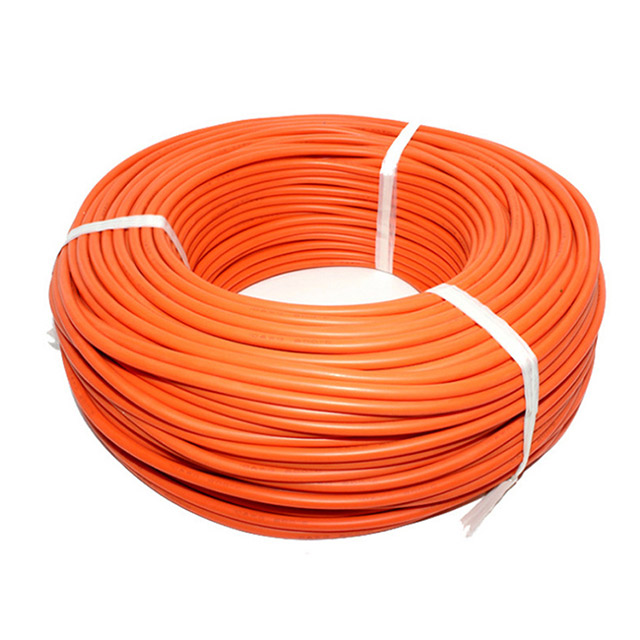
Evaluating Insulation Materials for Energy Storage Cables
Selecting the right polymer jacket defines the lifespan of your installation. You must balance flexibility, thermal endurance, and fire resistance. The industry relies heavily on a few specialized compounds for energy storage cables.
XLPE (Cross-Linked Polyethylene)
Engineers chemically treat XLPE to alter its molecular structure. This cross-linking process creates strong three-dimensional bonds between polymer chains. The resulting material exhibits incredible durability.
Pros: XLPE delivers exceptional thermal stability. It easily handles continuous operating temperatures up to 120°C. It provides superior moisture resistance compared to standard rubbers. Manufacturers also embed carbon black into the mixture. This addition gives XLPE inherent, long-lasting UV resilience.
Cons: Cross-linking makes the material somewhat stiff. XLPE is less flexible than elastomeric options. Installers must account for larger bend radii. Routing stiff XLPE through densely packed outdoor enclosures requires careful spatial planning to avoid terminal stress.
TPE / EPR (Elastomeric Rubber)
Thermoplastic Elastomers (TPE) and Ethylene Propylene Rubber (EPR) offer an alternative approach. These materials blend rubber properties into thermoplastic matrices.
Pros: They provide unmatched flexibility. Installers love TPE for tight battery-to-inverter routing. They handle sharp corners effortlessly. These elastomers also retain their pliability in freezing outdoor temperatures. They offer excellent weathering resistance over decades of deployment.
Cons: TPE and EPR are naturally combustible. Manufacturers must carefully formulate them to pass strict flame tests. Buyers must thoroughly verify vendor spec sheets. Ensure the specific elastomer carries verified VW-1 or FT1 flame retardancy ratings before procurement.
Why PVC is Disqualified for High-Reliability BESS
Polyvinyl Chloride (PVC) dominates residential indoor wiring. However, you should strictly avoid it in high-reliability outdoor storage systems.
Evidence: Standard PVC becomes highly brittle under UV exposure. It cracks apart within two years of direct sunlight. More importantly, PVC contains chlorine. It releases highly toxic hydrogen chloride gas when subjected to extreme heat. This gas combines with ambient moisture to form hydrochloric acid. The acid actively eats through expensive inverter circuit boards. Utilizing PVC violates modern safety standards for confined BESS enclosures.
Insulation Performance Breakdown
Material Type | UV Resistance | Max Temp Rating | Flexibility | Fire Safety (Halogen-Free) |
|---|---|---|---|---|
XLPE | Excellent (Carbon Black) | Up to 120°C | Moderate | Yes (Usually LSZH) |
TPE/EPR | Very Good | 90°C - 105°C | High | Varies (Check Specs) |
Standard PVC | Poor | 70°C - 90°C | Moderate | No (Releases HCl gas) |
Specifying High-Current DC Energy Storage Cables
Outdoor enclosures trap heat effectively. Passing massive amounts of direct current through conductors generates internal heat. Managing this dual thermal load is essential when specifying high-current DC energy storage cables.
Ampacity and Thermal Derating
High-current conductors naturally generate internal I²R heating. Outdoor enclosures simultaneously absorb intense solar radiation. Ambient temperatures inside a sealed steel box can easily exceed 50°C (122°F) on a sunny afternoon.
You cannot use standard ampacity charts under these conditions. You must apply stringent ampacity correction factors. The National Electrical Code (NEC) dictates derating percentages based on ambient temperature jumps. A cable rated for 200 amps at 30°C might only safely carry 140 amps at 55°C. Failing to derate causes insulation melting and invites immediate fire hazards.
Follow these steps to safely size your conductors:
Determine the maximum continuous charge and discharge current.
Measure or calculate the peak internal ambient temperature of the enclosure.
Apply the specific temperature correction factor from NEC Table 310.15(B)(1).
Select a conductor size capable of handling the adjusted ampacity load safely.
Voltage Drop Considerations
System efficiency plummets when conductors resist current flow. Establish strict criteria for minimizing voltage drop across all DC runs. We recommend keeping the voltage drop below 1-2% for optimal BESS efficiency.
Lower-voltage systems demand special attention. A 48V high-amperage residential setup experiences more severe performance impacts from a 1V drop than a 1000V grid-scale system. Pushing 250 amps through a 48V battery bank requires exceptionally thick conductors to prevent power loss and localized heating.
Flexibility vs. Current Capacity
Engineers face a distinct structural trade-off. High-current capacity requires thick, bulky copper. Thick copper resists bending. Trying to force rigid conductors into compact battery terminals causes severe mechanical stress. This stress eventually snaps terminal lugs or damages internal battery cells.
You must specify Class 5 or Class 6 highly stranded copper. Fine stranding dramatically improves flexibility compared to standard Class B building wire. Highly stranded conductors route safely around sharp corners. They absorb physical vibrations and prevent dangerous tension loads on delicate battery posts.
Navigating NEC and UL Standards for BESS Wiring
Compliance guarantees both safety and interoperability. Navigating the regulatory landscape prevents costly failed inspections. You must prioritize components explicitly tested for energy storage applications.
NEC Article 706 (Energy Storage Systems)
NEC Article 706 serves as the primary regulatory framework for BESS installations. It outlines stringent requirements for safe wiring methods. It dictates precisely how installers must execute battery-to-inverter connections.
The code mandates clearly labeled disconnects within the line of sight. It requires highly specific overcurrent protection device sizing. Following Article 706 ensures your conductors will not become ignition sources during a short circuit. Inspectors will thoroughly check your installation against these exact provisions.
UL 4128 vs. UL 4703 (PV Wire)
Industry standards often overlap, causing confusion. Many integrators mistakenly repurpose UL 4703 Photovoltaic (PV) wire for battery banks. PV wire is undeniably UV-resistant. It handles high voltages beautifully. However, it is fundamentally designed for rigid solar panel arrays.
UL 4128 represents a superior standard tailored specifically for BESS. The UL 4128 standard accounts for the unique demands of battery modules. It tests for extreme flexibility, low-voltage high-amperage cycling, and enhanced resistance to electrolyte exposure. Always prioritize UL 4128 verified products for internal enclosure routing.
Flame Testing Standards
Generic vendor claims regarding fire safety mean nothing. "Flame resistant" is merely a marketing term. You must advise your procurement team to look for rigorous test verifications.
Demand specific certifications like UL 1685 (Vertical-Tray Fire-Propagation) or IEC 60332 (Flame Retardance). These laboratory tests prove the material will self-extinguish when subjected to a heavy localized flame. Authentic test certificates guarantee the polymer matrix behaves predictably during emergency fault conditions.
Installation Realities: Routing, Glands, and Enclosure Integrity
Premium conductors represent only one half of a safe installation. How you route and secure them determines the long-term viability of the BESS. System-level integrity relies heavily on proper mechanical accessories.
Maintaining the Enclosure's NEMA/IP Rating
A specialized conductor is only as good as its penetration point. Drilling a hole in a NEMA 3R or IP65 outdoor enclosure destroys its weather rating instantly. You must seal every entry point meticulously.
Specify the use of UV-resistant, flame-retardant cable glands. Standard cheap plastics will crack under UV load, allowing rain straight into the battery box. We recommend robust nylon or nickel-plated brass glands. These specialized fittings grip the outer jacket tightly. They restore the enclosure's original IP rating while providing excellent strain relief against heavy wind loads.
Strain Relief and Mechanical Protection
High-capacity conductors carry significant physical weight. Vertical runs exert constant downward gravitational pull. If left unsupported, heavy lines pull directly on the terminal blocks.
This constant tension eventually loosens connections. Loose connections create micro-arcing and rapid heat buildup. Explain to your install team that they must secure all lines using rated cable cleats or heavy-duty ties. Properly anchoring the runs transfers the physical weight away from the sensitive battery terminals.
Segregation of DC and Comm Cables
A modern BESS relies on constant data communication. The Battery Management System (BMS) monitors cell voltages and temperatures continuously. High-current DC lines emit strong electromagnetic interference (EMI).
Running sensitive BMS communication cables parallel to high-current DC power lines invites disaster. EMI corrupts the data signals. The inverter may receive false temperature readings or shut down unexpectedly. Always practice strict physical segregation. Route data lines at least several inches away from power conductors, or utilize heavily shielded energy storage cables for the communication loops to block magnetic fields.
Conclusion
Selecting the right materials for outdoor battery enclosures requires diligent evaluation. You cannot treat BESS installations like standard indoor electrical projects. Extreme thermal loads, chemical exposure, and relentless UV radiation demand specialized polymers.
Vendor Evaluation Checklist: Always verify UV-resistance test data (such as ISO 4892 compliance). Demand explicit flame-retardant laboratory certifications from UL or IEC. Ensure the copper utilizes Class 5 or Class 6 stranding to guarantee terminal flexibility.
Next Steps: We highly recommend that system integrators request material datasheets and sample lengths from their manufacturers. Physically test the bend radiuses within your specific outdoor enclosure designs prior to initiating bulk procurement. Physical mockups reveal routing challenges that spec sheets often obscure.
FAQ
Q: Can I use THHN wire for outdoor battery enclosures?
A: No. Standard THHN lacks the necessary UV resistance and flexibility for battery terminals. It is also more susceptible to moisture ingress and is not typically rated for the rigorous flame tests required in modern BESS standards.
Q: What does LSZH mean, and is it necessary for outdoor enclosures?
A: LSZH stands for Low Smoke Zero Halogen. While primarily an indoor requirement to protect human life, it is increasingly specified for outdoor enclosures to prevent corrosive halogen gases from destroying expensive inverters and BMS electronics during a localized fault.
Q: How do I calculate the correct cable size for a sun-exposed battery box?
A: You must determine the maximum continuous current, apply the NEC ambient temperature correction factor (often for 50°C+ inside an outdoor box), and calculate the voltage drop. Always refer to the manufacturer's ampacity charts specifically rated for 90°C or 120°C insulation.


