
JYJ Motor Lead Wire Selection Guide For Industrial Electric Motor Applications
Views: 0 Author: Site Editor Publish Time: 2026-05-02 Origin: Site


Industrial facility uptime relies heavily on precise motor lead wire specifications. In harsh industrial environments, the electrical connection frequently becomes the most vulnerable point of failure, rather than the mechanical components of the motor itself. Facilities lose countless production hours simply due to poor wiring choices.
Underspecified lead wires inevitably degrade insulation prematurely when subjected to extreme thermal and mechanical stress. This degradation can quickly transition what should be a robust 15-year motor lifespan into a disastrous 15-month failure statistic. Heat, vibration, and chemical exposure attack the wire constantly.
We provide a strictly evidence-based, decision-stage framework. You will learn how to evaluate, specify, and terminate high-performance connections in low-voltage, high-demand industrial applications. Engineering teams must understand these variables to maintain seamless operational efficiency.
Key Takeaways
Thermal Thresholds Govern Lifespan: Operating just 10°C over a wire’s insulation rating effectively halves its expected operational life.
Material Dictates Application: Silicone and Fluoropolymer (FEP) dominate high-temperature applications (150°C–200°C), while XLPE serves standard switchgear setups.
Termination is Critical: Traditional wire nuts are unacceptable in industrial motor applications; compression lugs and insulated disconnects are mandatory for mechanical stability.
Compliance Context: Motor lead wires are evaluated as integrated components under NEMA/UL thermal tests, distinct from standard NEC field wiring requirements.
The Business Impact of Precision Motor Lead Wire Selection
Engineers often underestimate the thermal reality inside a motor terminal box. The internal environment operates strictly under the "10°C Half-Life" rule. Every 10°C rise above the maximum rated temperature reduces the motor and lead wire insulation lifespan by exactly 50%. Ignoring this thermal threshold guarantees premature equipment failure. You must specify insulation ratings correctly from day one.
Balancing wire sizes presents another major challenge. Undersizing introduces an immediate risk of overheating. The insulation breaks down rapidly, leading directly to phase-to-phase shorts. Conversely, oversizing creates unnecessary spatial constraints inside small terminal boxes. Stiff, oversized cables cause routing difficulty and waste valuable material costs. When choosing a highly flexible JYJ Motor Lead Wire, you achieve the right balance of current capacity and physical workability.
Industrial motors also endure severe continuous vibration. Standard stiff conductors fail quickly under this mechanical fatigue. The constant shaking fractures rigid copper strands, increasing electrical resistance and heat generation. Fine-stranded motor leads survive these environments effortlessly. They absorb the kinetic energy without compromising the electrical pathway.
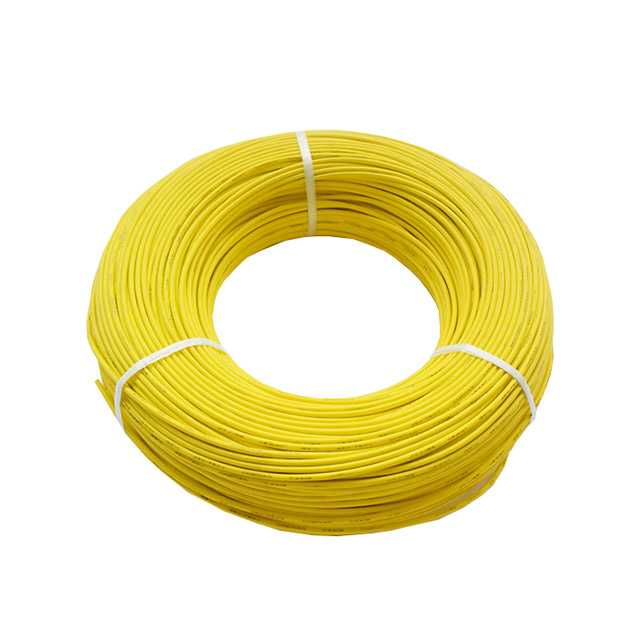
Core Evaluation Criteria for JYJ Motor Lead Wire Specification
You must match the wire insulation rating directly to the motor's thermal class. A Class F motor operates safely at 155°C, while a Class H motor requires insulation capable of handling 180°C. If your lead wire cannot survive these ambient temperatures, the system will eventually short out. Always verify the NEMA design letters before finalizing your materials.
Current capacity and duty cycles require careful mapping. Continuous maximum ratings differ wildly from intermittent rating demands. You must factor in start-up inrush currents. For instance, Direct-On-Line (DOL) starting can draw six to eight times the full load current. A properly specified JYJ Motor Lead Wire handles these transient spikes safely without melting the insulation.
Stranding architecture heavily influences performance. Tight terminal enclosures demand extreme flexibility. High-quality leads utilize fine-stranded copper, often heavily tinned or nickel-coated. This specific architecture resists high-temperature oxidation. It allows maintenance personnel to route the wire comfortably without causing micro-fractures in the conductor.
Material Selection Matrix: Matching Wire Chemistry to Environments
Wire chemistry dictates environmental survivability. Selecting the wrong jacket material exposes the bare conductor to moisture, chemicals, and extreme heat. Engineering teams evaluate four primary insulation types based on the exact industrial application.
Silicone (w/ Glass Braid): This remains the industry standard for extreme heat. It works perfectly for 150°C–200°C continuous operation. Bare silicone lacks abrasion resistance, so the external glass braid provides vital physical protection against rubbing inside the junction box.
XLPE (Cross-linked Polyethylene): XLPE serves optimally for standard switchboards and control panels. It performs well in lower-temperature industrial environments, typically rated up to 90°C–125°C. It offers excellent moisture and chemical resistance.
FEP/Fluoropolymer (Teflon): Fluoropolymers are strictly required for harsh chemical exposures. They maintain stability up to 200°C. You will see FEP in medical instrumentation or highly corrosive industrial environments.
PVC (MTW/TEW): PVC remains cost-effective but strictly limited to general-purpose, lower-temperature applications (90°C–105°C). You should completely avoid PVC in heavy industrial motor leads.
The table below summarizes these material constraints to streamline your decision-making process.
Insulation Material | Temperature Limit | Primary Benefit | Ideal Application |
|---|---|---|---|
Silicone w/ Glass Braid | 150°C – 200°C | Extreme heat & flexibility | High-temp industrial motors |
XLPE | 90°C – 125°C | Moisture/chemical resistance | Switchgear & control panels |
FEP (Teflon) | Up to 200°C | Harsh chemical stability | Corrosive environments |
PVC (MTW) | 90°C – 105°C | Cost efficiency | General low-temp wiring |
When you align the chemistry to the environment, systems run reliably. A durable JYJ Motor Lead Wire ensures that your electrical pathway outlasts the mechanical bearings.
Implementation Risks: Termination and Connection Best Practices
The most premium wire will fail if terminated improperly. Many facility managers still attempt to use standard wire nuts for motor connections. Wire nuts fail reliably in motor applications due to a lack of mechanical strength. They suffer high vibration vulnerability and directly violate industrial NEC standards. They simply cannot grip fine-stranded wire securely enough under heavy kinetic loads.
Standardized connections eliminate these failure points. You must use crimped compression lugs. Proper compression ensures zero air-gaps between the wire strands. This solid copper mass handles high current and mechanical stress safely. Below are the mandatory steps for implementing reliable terminations:
Strip the insulation precisely: Avoid nicking the fine copper strands, as damage reduces the current-carrying capacity.
Select the correct lug: Ensure the lug matches the specific wire gauge and stranding type perfectly.
Use a certified compression tool: Hand-crimping often leaves air gaps; hydraulic compression creates a cold weld.
Apply advanced disconnects: Utilize motor lead disconnects covered by reusable insulating boots.
Advanced disconnect technologies revolutionize maintenance. We recommend quick-disconnect systems, such as Polaris-style connectors. They heavily outperform legacy "bolted and taped" methods. These systems offer an immediate lifecycle return on investment. They eliminate the risk of slicing wire insulation during tape removal and severely cut maintenance downtime. Workers simply unbolt the insulated boot and swap the motor safely.
System Scalability: VFD Integrations and Premium Efficiency Upgrades
Variable Frequency Drives (VFDs) optimize energy use but introduce severe electrical stress. VFDs generate complex harmonics and intense voltage spikes. They impose strict inverter-duty demands on the entire electrical system. Lead wires must withstand these high transient voltages without breaking down. A standard wire jacket will degrade quickly under continuous harmonic bombardment.
Bearing current mitigation becomes necessary for larger systems. For VFD applications over 100HP, you face destructive shaft currents. Specifying insulated bearings or shaft grounding rings is necessary to protect the motor. These mechanical protections work in tandem with properly shielded cables. Integrating a high-performance JYJ Motor Lead Wire ensures the insulation holds up against these high-frequency voltage spikes.
Engineering teams frequently face repair versus replacement decisions. When specifying materials during a motor rewind, engineers must calculate the long-term lifecycle ROI. You must determine if upgrading to a new Premium Efficiency motor makes better financial sense than rewinding an older standard-efficiency unit. A new motor with modern, high-grade insulation typically uses far less energy. The efficiency gains over a decade often offset the initial capital expenditure of replacing the old unit entirely.
Conclusion
Specifying motor lead wire requires a balanced assessment of thermal class, stranding flexibility, and operating environment. You cannot treat industrial motor connections like general building wiring. The high temperatures and intense vibrations demand specialized engineering approaches.
Even the best materials require flawless execution. Emphasize to your team that the most premium lead wire will still fail if terminated improperly with non-industrial methods. Compression lugs and insulated boots remain non-negotiable for system reliability.
Take proactive steps immediately. Encourage your procurement and engineering teams to consult OEM specifications. They should evaluate the NEMA design letters for their specific loads. Always review technical data sheets carefully to match exact voltage and temperature constraints before finalizing any installation.
FAQ
Q: Why do factory motor lead wires often look much smaller than NEC field wiring recommendations?
A: Motor factory leads are governed by equipment standards (like NEMA and UL), not NEC field wiring tables. They utilize specialized, high-temperature insulation (often 150°C+) and fine stranded, nickel-coated copper. Because they are tested as an integrated thermal component within the motor, they safely carry higher currents with a smaller cross-section than standard 90°C building wire.
Q: If OEM data is missing, how should I calculate the replacement motor lead size?
A: When OEM baseline data is unavailable, sizing must be reverse-engineered based on four critical factors: the motor's temperature rating, expected full-load current, the number of leads, and the specific connection type. Always err on the side of higher thermal resistance.
Q: Can standard PVC wire be used for heavy industrial motor leads?
A: Generally, no. Standard PVC (like MTW or TEW) is typically capped at 90°C to 105°C. Heavy industrial motors frequently operate at internal temperatures exceeding these limits, requiring Silicone or Fluoropolymer insulation to prevent premature insulation failure and electrical shorts.


