
Improving Welding System Efficiency: The Role of High-Quality ARC Welding Cable in Energy Loss Reduction
Views: 0 Author: Site Editor Publish Time: 2026-06-30 Origin: Site


Industrial welding operations often focus on upgrading power sources to improve efficiency. They frequently overlook the transmission pathway entirely. Here, significant energy simply bleeds away as useless heat. Degraded or substandard transmission lines create severe voltage drops. They introduce high electrical resistance into the circuit. You lose valuable power before it even reaches the arc. This creates a massive inefficiency gap in everyday operations.
Upgrading to a properly specified, High-Quality ARC Welding Cable is a calculable, high-ROI method. It reduces overall energy consumption. It stabilizes arc performance for better welds. It also directly supports facility-wide sustainability targets.
You will learn how electrical resistance silently drains power from your manufacturing systems. We will explore the critical materials and construction methods defining top-tier cables. You will also discover actionable routing and sizing strategies to optimize your entire infrastructure.
Key Takeaways
Substandard or degraded cables increase electrical resistance, forcing power supplies to draw more utility power to maintain target arc voltage.
High-quality ARC welding cable utilizes high-strand-count pure copper and thermal-resistant insulation to minimize $I^2R$ (power) losses.
Proper cable sizing and length optimization are as critical as material quality in preventing operational energy waste.
Upgrading transmission components offers a quantifiable return on investment (ROI) while supporting corporate ESG (Environmental, Social, and Governance) compliance.
The Hidden Cost of Resistance: Where Welding Systems Bleed Energy
Understanding energy waste begins with basic electrical physics. Ohm's Law dictates how current flows through a circuit. In any electrical system, energy lost as heat is proportional to the square of the current multiplied by the resistance. We represent this mathematically as $I^2R$. Welding circuits operate at extremely high amperages. Therefore, the current squared becomes a massive number. Even a tiny fraction of an ohm of resistance causes severe power dissipation. If a cable holds just 0.05 ohms of excess resistance in a 300-amp circuit, you lose thousands of watts continuously. This lost power converts entirely into heat.
This heat generation triggers a destructive thermal degradation cycle. Cheap insulation materials fail to dissipate internal temperatures effectively. They trap heat tightly around the copper core. Elevated temperatures accelerate the chemical oxidation of copper. Oxidized copper conducts electricity poorly compared to clean copper. As oxidation spreads, electrical resistance climbs higher. Higher resistance generates even more heat. This thermal degradation cycle rapidly destroys budget cables from the inside out.
Modern inverter welding machines mask this degradation brilliantly. Advanced power supplies constantly monitor arc voltage. When they detect a secondary circuit voltage drop due to cable resistance, they automatically compensate. They pull excess primary power from your facility grid to push enough voltage through the compromised line. The welder rarely notices the drop immediately. The machine simply works harder. Consequently, your utility meter spins faster. You pay heavy industrial electricity rates to heat up rubber on the floor.
Eventually, resistance outpaces the machine's ability to compensate smoothly. Fluctuating voltage finally reaches the weld puddle. This instability ruins arc characteristics. You experience sudden increases in spatter. Consumable waste skyrockets as wire burns erratically. Welders must grind out structural defects and perform costly rework. Fixing bad welds wastes labor hours and shielding gas. This effectively multiplies the financial impact of poor transmission lines.
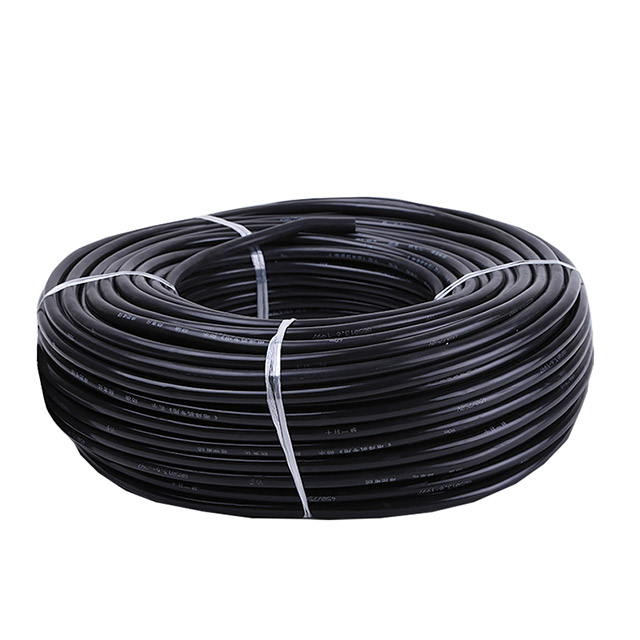
Core Characteristics of a High-Quality ARC Welding Cable
Conductor Purity and Stranding
Material purity dictates long-term electrical efficiency. Oxygen-Free Copper (OFC) and pure bare copper offer superior conductivity. They allow electrons to flow freely across long distances with minimal friction. Many budget suppliers substitute pure copper with Copper-Clad Aluminum (CCA). CCA cables feature a thick aluminum core coated in a microscopically thin copper layer. Aluminum possesses significantly higher electrical resistance per foot than copper. CCA heavily restricts power flow. It heats up rapidly under industrial loads and wastes massive amounts of electricity.
Material Type | Conductivity Rating | Resistance Level | Flexibility & Durability |
|---|---|---|---|
Oxygen-Free Copper (OFC) | Excellent (Highest) | Extremely Low | High flexibility, resists internal breakage |
Pure Bare Copper | Very Good | Low | Industry standard flexibility, highly durable |
Copper-Clad Aluminum (CCA) | Poor to Fair | High (Causes voltage drops) | Prone to rapid fatigue and snapping |
Strand count plays a role equally vital to material purity. A solid copper rod conducts perfectly but cannot bend. Welding requires dynamic movement. Manufacturers solve this using ultra-fine stranding. High-quality variants use Class K (30 AWG individual strands) or Class M (34 AWG individual strands) configurations. Thousands of microscopic copper wires weave tightly together. This prevents localized resistance spikes. When thick strands break inside budget cables, the current forces its way through fewer remaining wires. This creates severe bottlenecks. High strand counts maintain integrity despite constant bending, twisting, and pulling.
Advanced Insulation and Jacketing
The outer jacket serves two primary functions. It protects the fragile copper, and it manages thermal loads. Industrial floors present a hostile environment. Cables endure constant exposure to hydraulic oil, intense ultraviolet light, and molten slag droplets. Cheap PVC jackets harden quickly. They crack open and expose live wires.
Premium jackets utilize advanced synthetic polymers like EPDM (Ethylene Propylene Diene Monomer) or Neoprene. These materials withstand brutal industrial conditions without degrading chemically. Proper thermal dissipation prevents the core from reaching catastrophic temperatures. Copper resistance increases exponentially as the metal gets hotter. High-quality synthetic rubber breathes thermally. It pulls heat away from the core and radiates it into the ambient air. Keeping the internal temperature stable prevents the exponential spike in electrical resistance.
Evaluating Procurement Options: Cost vs. Lifecycle Efficiency
Procurement departments frequently obsess over initial purchase prices. Budget transmission lines look highly attractive on a spreadsheet on day one. You must, however, evaluate the long-term utility costs. Energy lost as heat adds up exponentially across multiple shifts. A cheap, highly resistive cable wastes kilowatts every single hour it operates. Over a three-to-five-year operational lifecycle, this wasted grid electricity costs significantly more than the initial savings. You effectively pay a continuous penalty to run substandard equipment.
You need to define strict success criteria for vendor selection. We recommend standardizing your procurement process using the following checklist:
AWG Verification: Ensure the copper weight matches true American Wire Gauge standards. Budget vendors often reduce copper volume by thickening the rubber jacket.
Thermal Ratings: Demand jackets rated for continuous operation between 90°C and 105°C. Lower ratings indicate inferior polymers.
Regulatory Compliance: Verify active UL (Underwriters Laboratories) or CSA (Canadian Standards Association) listings.
Strand Verification: Confirm Class K or Class M stranding designations on the official specification sheets.
Selecting the appropriate ARC Welding Cable requires rigorous technical vetting. Risk mitigation forms a massive part of this evaluation. Running undersized, low-quality lines presents severe safety and liability risks. Inferior insulation melts easily under heavy industrial loads. Melted jackets expose bare, energized copper to grounded metal structures. This triggers catastrophic short circuits. Equipment damage and facility fires become immediate threats. OSHA inspectors frequently cite operations for degraded, taped-up, or undersized wiring.
Implementation Realities: Sizing, Routing, and Voltage Drop Prevention
You must match your cable AWG precisely to the specific duty cycle and maximum amperage of your application. Operating a 400-amp power source at a 60% duty cycle demands a vastly different gauge than a 150-amp maintenance welder. Undersized lines choke current flow severely. They act exactly like a narrow pipe restricting high-pressure water.
Machine Amperage | Total Circuit Length (Up to 100 ft) | Total Circuit Length (100 to 150 ft) |
|---|---|---|
150 Amps | #2 AWG | #1 AWG |
250 Amps | #1/0 AWG | #2/0 AWG |
350 Amps | #2/0 AWG | #3/0 AWG |
450 Amps | #3/0 AWG | #4/0 AWG |
Facilities routinely miscalculate circuit distances. The total electrical circuit length includes both sides of the system. You must measure the work line connecting the machine to the table. You must also measure the electrode line reaching the stinger. A 50-foot work lead combined with a 50-foot electrode lead creates a 100-foot total circuit. You must size your AWG based on this combined 100-foot distance. Overlooking this detail guarantees severe operational energy waste.
Operators frequently coil excess lengths on the shop floor. They incorrectly believe this keeps the workspace safe and tidy. Coiling live wires creates a massive electrical hazard. Tightly coiled lines act as an electromagnetic coil. They generate a powerful inductive choke effect. This phenomenon drastically increases resistance. It impedes power flow and generates localized extreme heat. It can actually melt the jacket into a solid block of rubber. Always lay excess lines out straight. If you must gather them, use loose, wide figure-eight patterns. Optimizing routing for your ARC Welding Cable directly stabilizes arc performance.
The highest quality components still fail if the connection points remain degraded. Energy loss happens rapidly at the terminals. Lug connections must undergo professional crimping using calibrated tools. Ground clamps require clean, bare metal contact surfaces. Oxidized lugs, loose bolts, and paint-covered clamp sites act as powerful resistors. They generate intense heat and block optimal power transfer.
Aligning Cable Selection with Sustainable Welding and ESG Goals
Industrial facilities face immense pressure from stakeholders to meet ESG (Environmental, Social, and Governance) targets. Upgrading your transmission lines provides a highly quantifiable way to support these corporate initiatives. Reducing kilowatt-hour (kWh) consumption at the individual machine level directly translates to lower Scope 2 greenhouse gas emissions. You draw significantly less power from fossil-fuel-dependent utility grids. Over an entire facility with dozens of machines, the carbon reduction becomes substantial.
Durable materials naturally generate less industrial waste. Budget products fail constantly. Their jackets tear on sharp steel, and their internal copper snaps from fatigue. You must repeatedly throw them into landfills and purchase replacements. Premium lines last exponentially longer. They survive abrasive environments and heavy physical abuse. Reducing your consumption of raw materials aggressively improves your facility's environmental footprint.
You cannot manage metrics you do not measure. We strongly recommend implementing robust baseline energy audits before and after a system upgrade. Follow these specific steps to capture reliable data:
Attach a clamp meter and data logger to the primary power input of your machine.
Run a standardized, timed weld using your old transmission lines.
Record the total kilowatt-hours consumed during the test.
Install a newly specified High-Quality ARC Welding Cable.
Repeat the exact same standardized weld and log the new power consumption.
You will clearly see a reduction in primary power draw. Document these efficiency gains meticulously. You can use this concrete data for internal ESG reporting and corporate sustainability audits.
Conclusion
Energy-efficient welding requires a holistic, systemic approach. The most technologically advanced power source available cannot overcome a compromised, highly resistive transmission line. Excess heat loss quietly robs your operation of electrical power, financial profitability, and structural weld quality.
We strongly recommend conducting an immediate operational audit of your current cable conditions. Walk the production floor and inspect the lines during operation. Check for excessive heat generation near the terminals. Inspect the outer jackets for severe wear, UV cracking, or thermal discoloration. Most importantly, verify you have the correct AWG sizing for your total calculated circuit length.
Do not let poor transmission infrastructure drain your energy budgets. Consult technical specification sheets to verify material purity and stranding class. Contact a specialized supplier immediately to help calculate the precise return on investment for upgrading your facility's cabling infrastructure.
FAQ
Q: How much energy can I realistically save by upgrading my welding cables?
A: The savings depend entirely on your current degradation level. Upgrading from undersized, oxidized lines to premium copper can reduce secondary voltage drops from 10% down to under 2%. For a facility running multiple high-amperage machines daily, this translates to hundreds of wasted kilowatt-hours saved per month, substantially lowering utility bills.
Q: What is the difference between pure copper and CCA welding cables?
A: Pure copper offers superior electrical conductivity and maximum flexibility. Copper-Clad Aluminum (CCA) uses an aluminum core with a thin copper coating. CCA has much higher electrical resistance, causing significant voltage drops. It also suffers from rapid internal metal fatigue, leading to breakage and overheating in high-amperage industrial applications.
Q: How do I know if my current ARC welding cable is causing energy loss?
A: Look for clear physical diagnostic signs. The lines will feel unusually hot to the touch during normal operation. You will experience inconsistent arc starts or sudden voltage fluctuations. Visually inspect the exterior for localized jacket discoloration, which indicates severe internal overheating and advanced copper oxidation.
Q: Does cable length really impact energy consumption?
A: Yes, absolutely. Distance shares a direct, linear relationship with electrical resistance. As circuit length increases, resistance grows, leading to severe voltage drops. This forces your machine to pull more primary power. You must strictly upsize your AWG to compensate for longer runs to prevent massive energy waste.


