
Complete Guide To Photovoltaic Cables For Rooftop And Ground-Mount Solar System
Views: 0 Author: Site Editor Publish Time: 2026-05-15 Origin: Site


Photovoltaic cables act as the critical circulatory system of any solar array. You cannot afford to treat them as an afterthought. Substandard wire selection or improper routing leads to severe power degradation. It also causes high-resistance thermal events and costly NEC compliance failures. When wires chafe or connections fail, entire solar arrays can catch fire. The success of your installation hinges on selecting the exact cable type and gauge. You must balance environmental durability against strict voltage drop limits. This decision changes drastically across varying deployment environments. In this guide, we will explore how to specify the right wire for your project. You will learn to navigate the differences between exposed and underground routing. We will also cover advanced wire management techniques and critical code requirements. These guidelines ensure your system remains safe and efficient for decades.
Key Takeaways
Application Dictates Material: Dedicated PV Wire is mandatory for exposed UV environments, but transitioning to THWN-2 in PVC conduit is more cost-effective for long underground ground-mount runs.
Efficiency Hinge: Designing for a voltage drop strictly under 3% preserves energy yield over the 25-year lifecycle.
Fire Prevention is Physical: The leading cause of DC arc fires is mismatched MC4 connectors and poor wire management (chafing on sharp racking edges).
Code Compliance: Distinct grounding and bonding requirements (NEC Article 690) dictate safety and grid interoperability.
Categorizing Solar Cables: PV Wire, USE-2, and THHN/THWN-2
Evaluate your baseline options carefully before starting any installation. You have three industry-standard cable types to choose from. They differ significantly in insulation thickness, weather resistance, and code approvals. Selecting the wrong material guarantees premature failure.
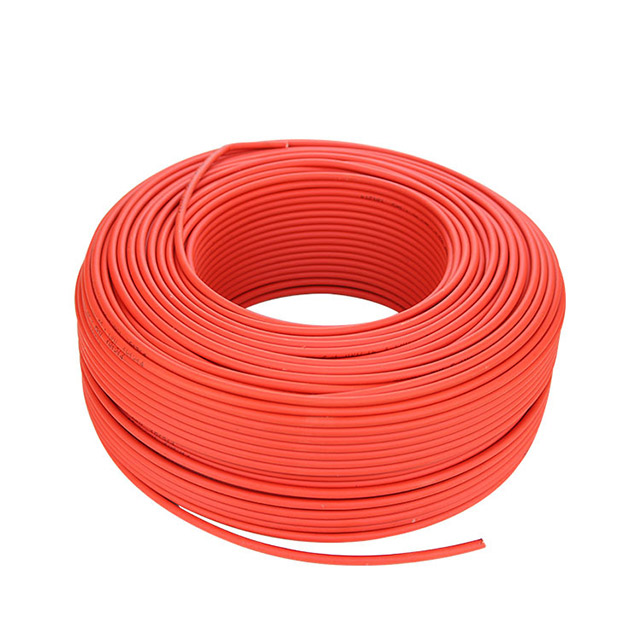
PV Wire: This material is purpose-built for solar applications. It features the thickest insulation available on the market. You must use it for direct, unshielded outdoor exposure. It easily handles high UV radiation and extreme temperature variance. Incorporating high-quality Photovoltaic Cables ensures maximum safety in these harsh outdoor conditions. They resist cracking even after years of direct sunlight.
USE-2 (Underground Service Entrance): This cable offers excellent moisture resistance. Installers appreciate its durability for direct burial applications. However, it lacks the extreme UV rating found in dedicated PV wire. You should avoid leaving USE-2 exposed to direct sunlight for prolonged periods.
THHN / THWN-2: Do not use this cable for direct outdoor exposure. The jacket degrades quickly under UV light. However, THWN-2 is highly effective and budget-efficient inside protective PVC conduit. Contractors rely on it heavily for ground-mount trenching runs leading back to the main service panel.
Single-Core vs. Multi-Core
You must also choose between single-core and multi-core constructions based on your physical layout.
Single-Core: This serves as the standard for most string runs. It offers superior heat dissipation. Installers find it much easier to route along aluminum rails.
Multi-Core: You should use this option when physical space is constrained. It allows for tighter bend radii in complex layouts, though it dissipates heat less effectively.
Cable Type | UV Resistance | Moisture Resistance | Best Application |
|---|---|---|---|
PV Wire | Extreme | High | Exposed arrays, direct sunlight |
USE-2 | Moderate | Extreme | Direct burial, underground runs |
THHN/THWN-2 | Low | High | Inside buried PVC conduit |
Environment-Specific Strategies: Rooftop vs. Ground-Mount
Your installation environment dictates your entire wiring strategy. Roofs and open ground present completely different physical challenges.
Photovoltaic Cables for Rooftop Installations
Hazard mitigation is your first priority on a roof. Cables face severe radiant heat from asphalt shingles or metal roofing surfaces. They also absorb intense heat from the module backsheets above them. This punishing environment requires high-temp-rated insulation. Choosing appropriate Photovoltaic Cables for Rooftop prevents the wire from melting or degrading over time.
Routing best practices emphasize keeping cables elevated. Keep them off the abrasive roof surface at all times. Wind constantly vibrates the array. If wires touch the roof, friction will slowly sand away the insulation. You should use stainless steel wire clips or dedicated cable trays. This simple practice prevents ground faults and extends the life of your array.
Ground-Mount Routing and Trenching Realities
Ground arrays introduce the distance problem. These structures often sit hundreds of feet from the home or inverter. Running expensive PV wire the entire distance becomes highly inefficient for your project budget.
The hybrid solution works best in this scenario. Use PV wire at the array itself. Terminate these module leads at a weatherproof transition junction box on the racking structure. From there, transition to heavier-gauge THWN-2 wire. Run this wire inside a buried PVC conduit back to the home. Ensure the conduit has a minimum 1.5-inch diameter. This generous sizing leaves room for future system expansion without digging new trenches.
Evaluating System Sizing and Electrical Constraints
Electrical physics determine your cable gauge. You cannot guess wire sizes. System safety relies on precise calculations.
Ampacity and the 3% Voltage Drop Rule
You must differentiate between ampacity and voltage drop. Ampacity measures the maximum current a wire can carry before its insulation melts. Voltage drop measures the electrical pressure lost over a distance. Ensure your chosen wire gauge can handle the maximum short-circuit current (Isc).
Deciding between 10 AWG and 8 AWG matters significantly over long distances. Your primary goal is to transport power without losing more than 3% voltage. Undersized cables cause excessive thermal loss. They actively pose a dangerous fire hazard.
Follow these steps to calculate wire requirements:
Identify the maximum current output of your combined panel string.
Measure the exact one-way wiring distance to the inverter.
Apply an NEC-compliant voltage drop calculator to find the minimum gauge.
Upsize the wire one level if you anticipate future capacity additions.
System Voltage Limits
You must align cable insulation ratings with your system architecture. Standard US residential systems max out at 600V DC. This limit is strictly enforced by NEC 690.7. Commercial systems scale up to 1000V or even 1500V DC. Using a 600V-rated cable on a 1000V commercial system invites catastrophic insulation breakdown and arcing.
String Configuration Impact
Your wiring strategy changes everything. Wiring modules in series increases the total voltage. Wiring them in parallel increases the total current. High current demands thicker cable gauges. It also dictates specific junction box requirements to handle the combined load safely. Designing high-voltage series strings usually allows you to use thinner, more manageable wire gauges.
Advanced Wire Management: Preventing Failures and Fires
Poor wire management causes more system downtime than defective panels. You must plan your layout meticulously.
Layout Strategies (Daisy Chain vs. Leapfrog)
You have two primary layout options for connecting panels.
The Daisy Chain method remains the standard choice. It is straightforward and intuitive. However, it often leaves excess dangling wire beneath panels. You also have to run a long return cable from the end of the row back to the start.
The Leapfrog (or Skip) wiring method connects alternating panels. You wire panels 1, 3, 5, and then loop back to 4, 2. This completely eliminates the need for long return cables. It reduces material requirements and minimizes thermal energy loss along the string.
Managing Scale (Direct vs. Trunk Methods)
Scale dictates your routing choices. We can compare the two main methods below.
Method | Best Application | Key Advantage | Major Drawback |
|---|---|---|---|
Direct Method | Small residential arrays | Simple and fast to execute | Creates spaghetti wiring at scale |
Trunk Method | Commercial scale arrays | Clean layout, easy maintenance | Requires intense pre-planning |
The Direct Method suits small arrays well. You run leads directly to the combiner box. However, the Trunk Method is absolutely required for commercial scale. It uses pre-planned wire trays or conduits. This prevents spaghetti wiring, lowers labor hours, and simplifies future maintenance.
The MC4 Mismatch Danger (Critical Risk Factor)
This represents a critical risk factor in the industry. Never connect different brands of MC4 connectors. Even if manufacturers advertise them as "compatible," you should avoid mixing them. Different brands have microscopic variations in pin sizes and housing tolerances. Forcing them together creates micro-gaps. These gaps lead to high-contact resistance. Eventually, they cause severe arcing and destructive roof fires. Always use the same brand of connector across your entire system. For reliable connections, integrating certified Photovoltaic Cables reduces these compatibility risks.
Grounding, Bonding, and NEC 2023 Compliance
Electrical code compliance ensures human safety and grid interoperability. You must understand the specific rules governing solar arrays.
Grounding vs. Bonding (NEC Clarification)
The National Electrical Code (NEC) defines these terms very specifically. They are not interchangeable.
Grounding means connecting the system to the earth. You typically use a driven ground rod. This path dissipates massive energy spikes from lightning strikes.
Bonding means connecting all non-current-carrying metal parts together. You must link the aluminum frames and racking rails. This eliminates dangerous voltage potentials between physical components. It helps clear electrical faults quickly by providing a low-impedance path to the breaker.
Corrosion Prevention
Watch out for galvanic corrosion on your ground mounts and roofs. Direct contact between a bare copper grounding wire and an aluminum solar frame causes rapid corrosion. Moisture acts as an electrolyte, destroying the aluminum. You must emphasize the mandatory use of bi-metallic grounding lugs. These lugs are usually stainless steel or tin-plated. They safely bridge the two different metals without causing a reaction. When researching safe installation standards, reviewing high-quality Photovoltaic Cables for Rooftop provides insight into proper material pairings.
GFDI Requirements
You must address ground faults rigorously. The NEC mandates that DC circuits exceeding 30V or 8A include Ground-Fault Detector Interrupter (GFDI) protection. This equipment monitors the circuit constantly. If current leaks to the ground, it automatically severs power. This rapid shutdown protects the array, the surrounding structure, and any personnel nearby.
Conclusion
You must base final cable procurement on three core pillars. First, calculate the total distance to manage voltage drop effectively. Second, assess the exposure environment to choose between UV-rated wire and underground conduit. Third, verify NEC compliance for ampacity and grounding ratings.
Map out your specific string design before purchasing materials.
Choose the Leapfrog wiring method to minimize long return runs and thermal loss.
Calculate the exact physical distance to your inverter to finalize your wire gauge.
Standardize your MC4 connector brands to eliminate dangerous arcing risks.
FAQ
Q: What is the difference between PV wire and standard electrical wire?
A: Standard electrical wire, like THHN, degrades rapidly outdoors. UV radiation and thermal cycling destroy its outer insulation. PV wire features a much thicker, specialized cross-linked jacket. It withstands direct sunlight, extreme heat, and freezing temperatures without cracking or failing over its 25-year lifespan.
Q: Can I bury PV wire directly in the ground for my ground-mount system?
A: While some PV wires carry a direct-burial rating, it is rarely the best practice. Direct burial leaves wires physically vulnerable to shifting rocks, soil movement, and rodents. Transitioning to THWN-2 wire inside a buried PVC conduit offers far superior longevity and allows for easier future upgrades.
Q: How do I calculate the correct cable gauge for my solar panels?
A: You must evaluate your maximum short-circuit current and the total one-way run distance. Your goal is keeping the voltage drop strictly under 3%. Use an NEC-compliant voltage drop calculator. High current over long distances always requires thicker wire, such as stepping up from 10 AWG to 8 AWG.
Q: Why can't I mix and match solar connectors from different manufacturers?
A: Different brands feature microscopic variations in pin sizes, crimp tolerances, and housing shapes. Forcing them together creates micro-gaps inside the connection. These gaps generate high contact resistance. This resistance produces intense localized heat, leading to DC arcing and potentially catastrophic fires.


